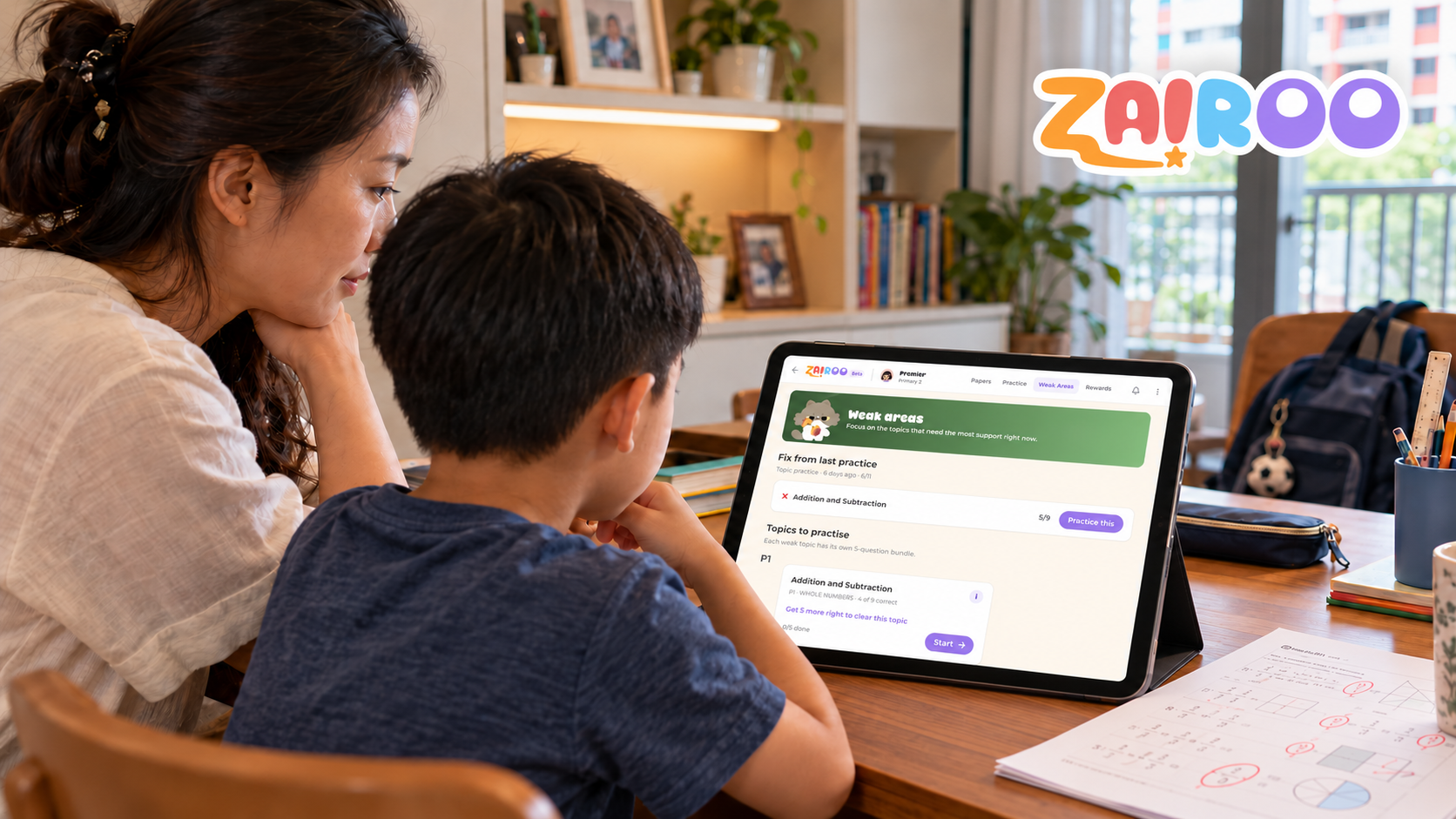
How to Identify Your Child's Maths Strengths and Learning Gaps
To identify maths strengths and learning gaps, look for the topics a child can explain and apply independently, alongside the moments where they pause, guess, or need the same help repeatedly.
A useful learning-gap view shows strengths to build on, patterns to address, and one practical next step rather than labelling a child as weak at maths.
For parents, the practical aim is to make the next learning step clear enough for a child to stay involved rather than wait to be rescued.
What is really happening
Parents often notice the wrong answers first. That is understandable, but a useful picture of learning also includes what a child can do confidently, which strategies they already use well, and where uncertainty starts.
This is why more pressure or more worksheets can miss the point. Before a child can practise productively, they need a clear way back into the task.
What parents can notice
Look for repeated pauses, guessing, method changes, and question types that need adult confirmation. Balance those with topics the child can explain and apply without support.
The goal is not to diagnose every difficulty at home. It is to notice the pattern early enough to respond with a useful prompt instead of a rushed answer.
What better support looks like
Helpful support makes the next move visible while leaving the child involved in the thinking. It can clarify the question, invite a small attempt, and guide the child to explain the method rather than simply copy a result.
Zairoo offers topic practice and step-by-step question guidance. For supported Zairoo worksheet sets, use the separate worksheet analysis tool; do not assume arbitrary school worksheets can be marked in the Parent or Child portal. Use the child's working alongside any report to choose a next task.
What to do next
After practice, note one strength, one recurring barrier, and one next step. Keep the conversation about patterns and progress rather than labels.
Choose one small routine to repeat this week. Consistent, calm guidance is more likely to build confidence than a last-minute rescue when everyone is already frustrated.
Want more support? Start with Zairoo’s free Basic plan for Singapore Primary 1–6 maths practice and step-by-step question guidance. Basic has usage limits. See the current plans and limits to compare Basic and Premium.
How Zairoo primary maths practice works
Explore the parent practice routine, topic selection and progress information.