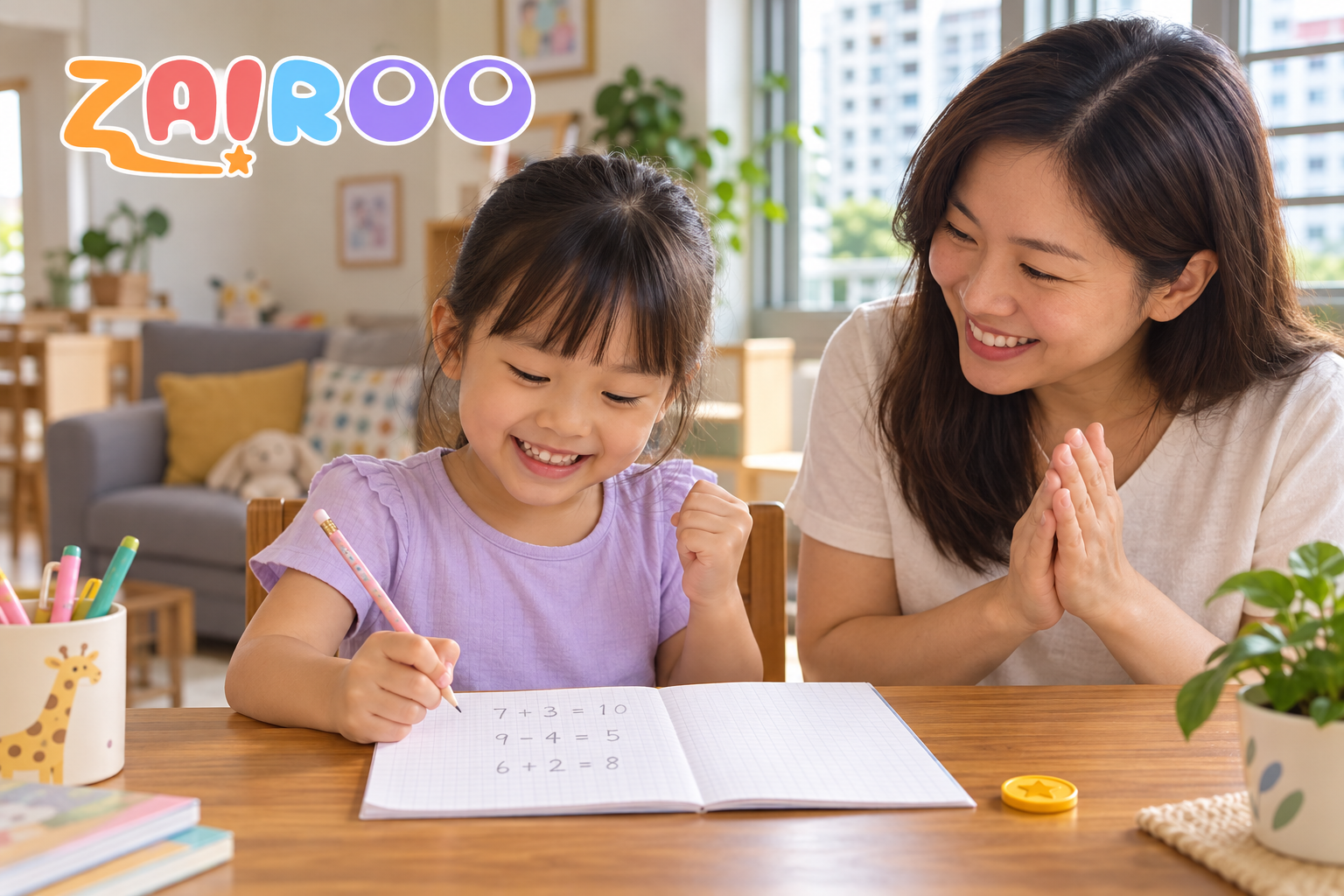
Some families use small earned rewards to acknowledge maths practice. Whether this helps a particular child keep practising needs checking: look for a thoughtful attempt and an explanation, not only a higher coin balance. Keep any reward separate from feedback on the method; it is not proof of mastery.
A child asks what they get for doing maths. It can sound like motivation has become a transaction. Yet a small reward does not have to erase the learning point.
What matters is the behaviour being encouraged and the conversation that follows the reward.
Reward the process you want to see again
A useful goal is specific: try a problem independently, explain a changed step or return to a question after feedback. 'Finish ten pages for a prize' measures volume, which may be the wrong target if the child is stuck on one method.
Tell the child what they did well: 'You tried another representation when the first one did not work.' This makes the achievement visible even when the final answer was not immediate.
Keep the reward smaller than the lesson
After an earned reward, ask what became clearer. Could the child solve a similar problem? Can they name a mistake they corrected? The answer gives you a better picture of progress than a coin balance alone.
If the child rushes for points, shorten the task and reset the rule: the aim is one thoughtful attempt, not the fastest click. A reward system should make it easier to come back to learning, not easier to skip the thinking.
Where Zairoo's Prize Shop fits
Zairoo includes earned coins and a Prize Shop, but available items and eligibility can change. Talk about the effort your child can control rather than promising a particular prize.
Use the reward as a conversation starter: 'What did you do to earn it, and what will you try next?' Explore guided practice when your child needs a supported route back into practice.
A worked example to try together
A child tries 18 divided by 3 and first guesses 5. Rather than rewarding only the correct answer, ask them to draw three equal groups and share 18 counters. Six land in each group, so 18 divided by 3 = 6. The useful behaviour to notice is that they checked and changed their method. A coin or small prize, if available, can acknowledge the effort; it does not prove the child has mastered division.
For a fresh check, share 20 counters equally among four children. Each gets 5, so 20 ÷ 4 = 5. Ask the child to check with 4 × 5 = 20. Use the Primary 2 multiplication and division guide for this level of equal-sharing practice. A correct answer plus a clear explanation tells you more about that example than the reward alone.
Exact questions parents can ask
"What did you change after checking your first attempt?"
"Can you show why each group has six?"
"What would you try first next time?"
Example and source notes
The MOE syllabus is used for curriculum context. The EEF Teacher Feedback guidance concerns teacher-delivered feedback for ages 5–18 across subjects; it does not test Zairoo, its Prize Shop or the effect of rewards on this child. The reward routine here is a practical suggestion to observe and adjust, not a proven attainment claim. The maths examples are illustrative, not official exam questions.
References and further reading
How Zairoo primary maths practice works
Explore the parent practice routine, topic selection and progress information.